
WHY TRAIN? When training is not producing resultsDoes training feel like this sometimes? Disappointing with no profit or return for your money?
With empty promises?

Why train then?
When it seems we are not succeeding.
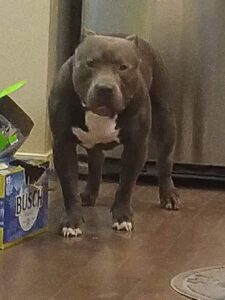
Diligence is key factor in our success. Stay to the course teaches your dog that the rules do not change, and when we have a dog with difficult issues and a strong personality…to gain respect and change their behavior, persistence and consistency is essential.

What happens when we train constantly is that no matter how much we struggle with our dogs, they will process the information through consistent instructions; consistent corrections; and consistent consequences.

Effective dog training is more like this diagram where in reality it is more like 10 steps forward and 5 steps back. Always resorting and returning to basic training when our dogs slide, which reinforces training.
In doing so your canine will start to put other information together about past training (skills) and other behavior starts to fall off the wagon as our dogs puts blocks of skill sets together.

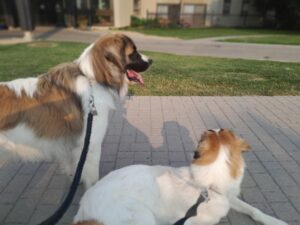
For example, I trained 2 Great Pyrenees’ dogs that were persistent in them having things their way. As litter mates they wanted leadership over their owner, and when training, they will focus on each other before their owner.
When we would go out for walks the female who likes to stir trouble between them would get triggered sometimes by other dogs, but sometimes, which took a long time to learn was because she was was tired, or needed time alone with her owner, and for other various factors.
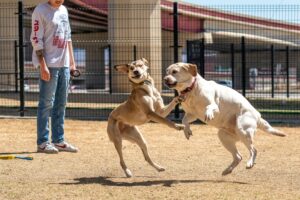
However, she would start to play fight with her brother, which could not happen in public because they are large dogs, the male weighing in at 250. They would be up on their hind legs, running circles around her owner, sometimes dropping her to the ground. Looking like she had zero control.

So what do we do in these difficult behavioral situations. First, I started teaching the command STOP. And click. Then reward when she automatically started to sit and stop. This took 6 long months. Every time the behavior started I would say “ STOP” and make her sit, sometimes holding her in sit position, I would instruct her owner to take them home (consequences),and the next walk they would walk separately .
Requiring the energy from the owner for two walks…. In a day or two, or a week later I would try it again. And if they acted up, they would take them home.
Thus was very frustrating and almost gave up…but persisted. One day they were so intent. Her owner fell down a hill…and this is where it all changed. It clicked in the dogs head, what they were doing, and the dog
stopped. Not only did she STOP, but Every time after that when they acted up she would sit, and stop. the behavior stopped.
Now, their second difficult behavior was charging and barking to play with other
dogs, while out on walks. Hence, as the other behavior corrected, which was the same skill in a different context, they processed the sit and stop, and automatically started to STOP barking at other dogs or at least leaping to get to them by sitting. The barking gradually started to fade.

Our canine companion learns through repetition and consistency with commands, step by step, building on owner expectation and skill.
The second point with a canines learning is that they begin to internally understand the command in different contexts.
So do not give up. Stay tuned to your current regime and they will get it, and put the training together, but it rarely happens the way we think it is going to.
Often as owners there is also something we have to change about ourselves; our body language, tones, and our own behavior is where we get those results.